The best chef knives balance blade length, grip, and edge style for the way you prep food. These picks range from compact and travel-ready blades to longer forged knives, so compare their intended tasks and care needs before choosing.
Quick Top Products
imarku Japanese Chef Knife 8 Inch
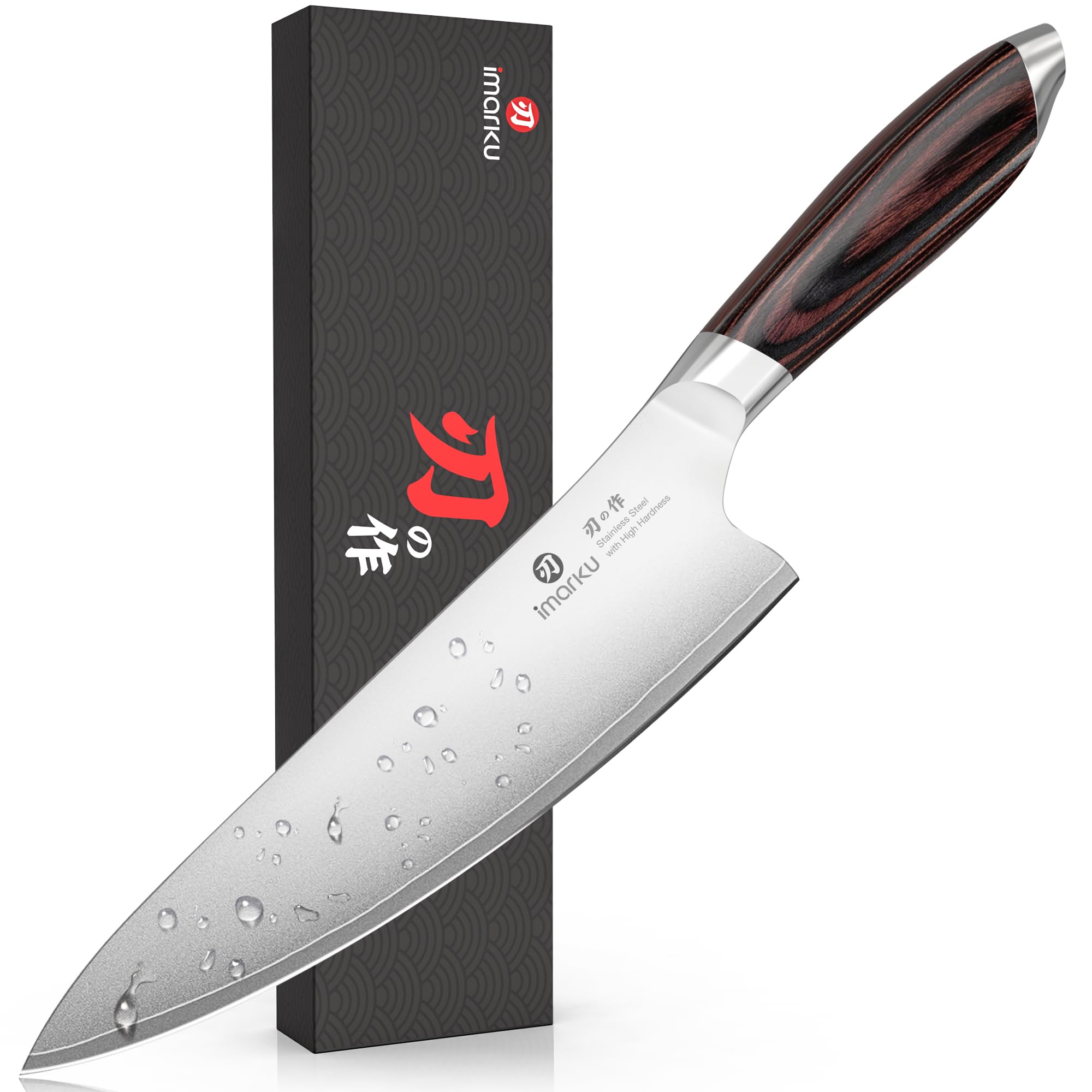
- An 8-inch blade has a 12°±2° double-bevel edge.
- The pakkawood handle and knife weigh 210g.
- Its matte finish targets sticking with foods such as potatoes and onions.
Best For: Home cooks who want a light, balanced blade for everyday slicing and chopping.

Messermeister Oliva Elite Stealth 8-Inch
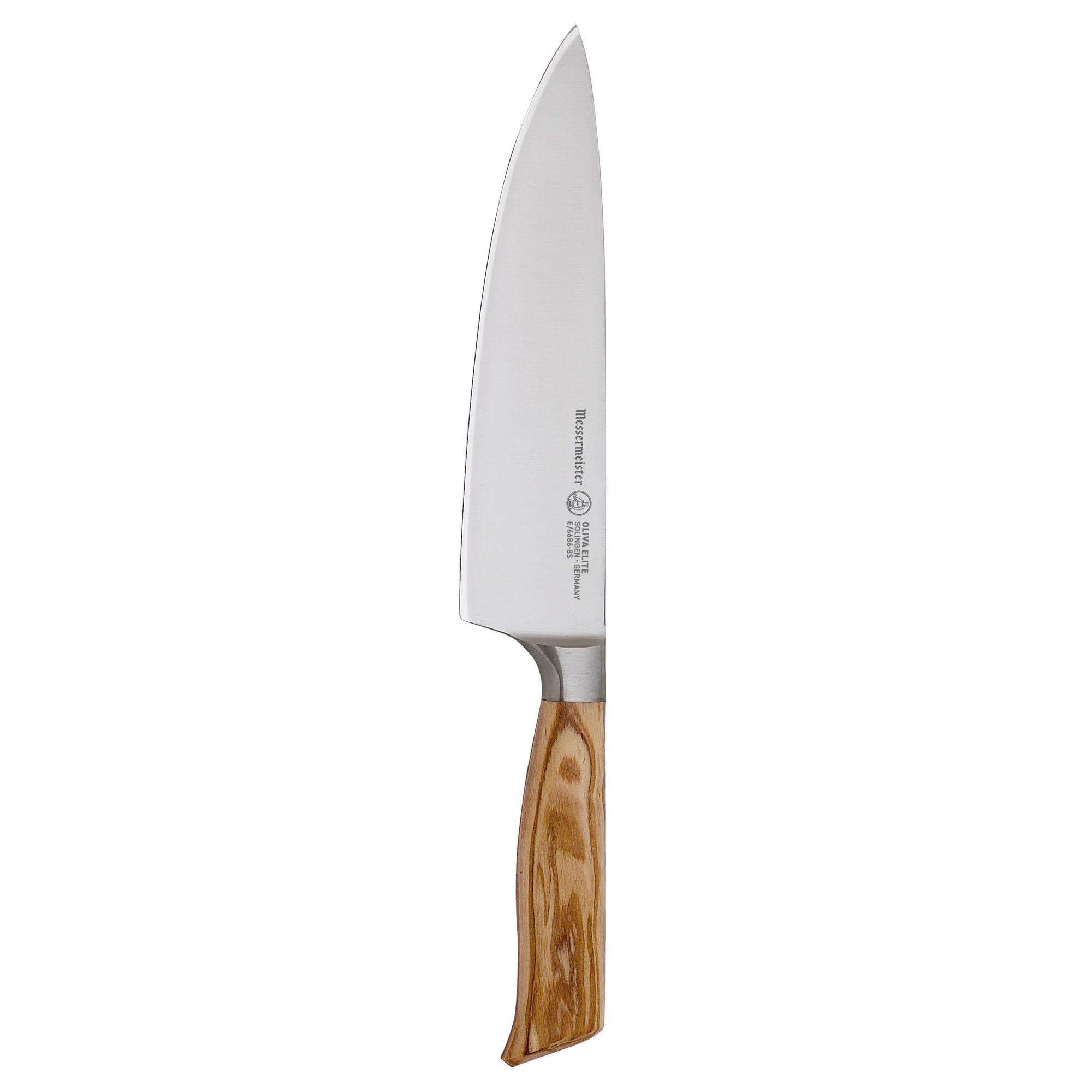
- It has a German 1.4116 steel alloy blade and olive wood handle.
- The 15-degree edge is suited to a wide range of ingredients.
- This version is about 25% thinner and 10% lighter than the traditional model.
Best For: Cooks who prefer a thinner, lighter German-steel knife with an olive wood handle.
Messermeister Meridian Elite 8-Inch
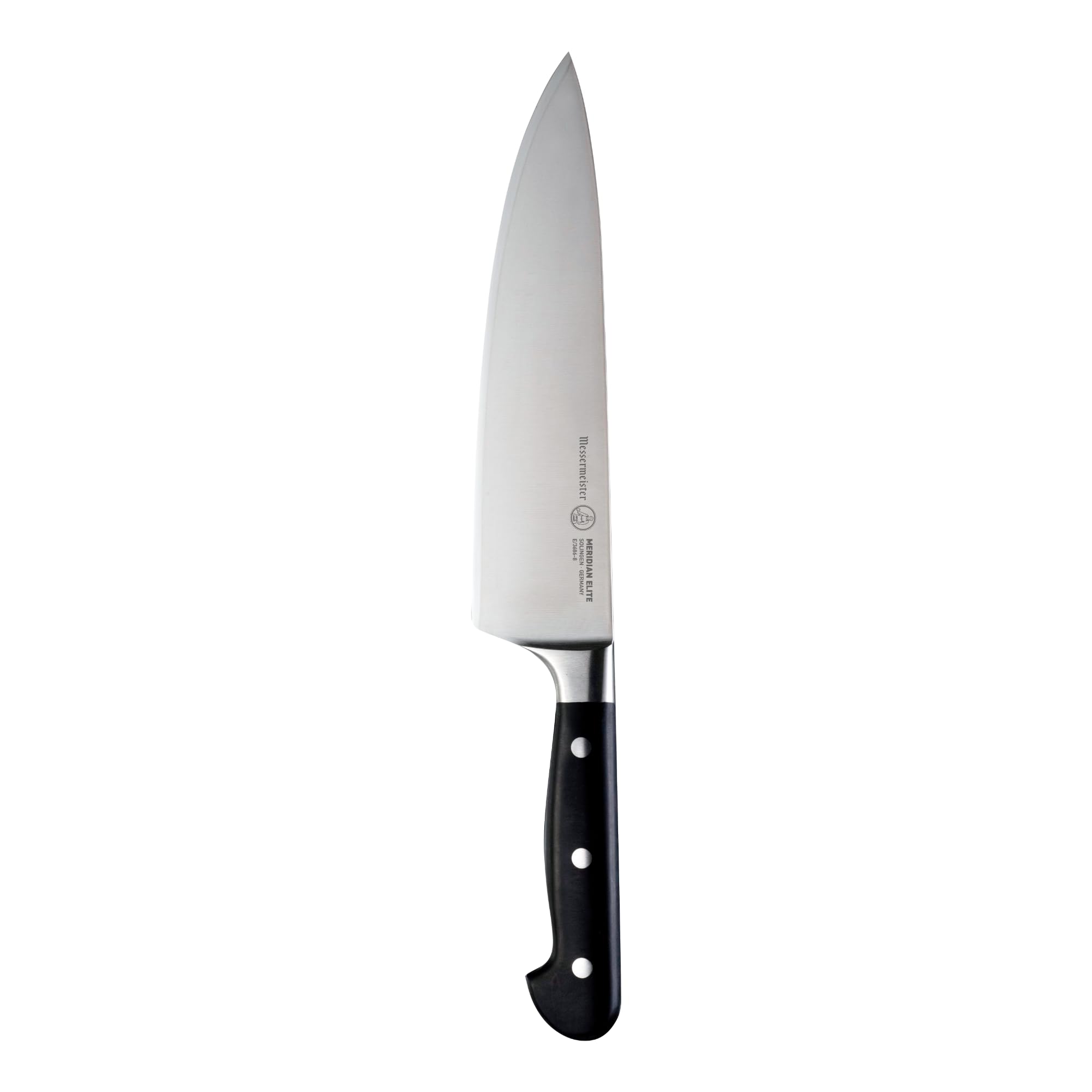
- It uses a triple-rivet, full-exposed tang construction.
- The blade is German 1.4116 steel with a 15-degree edge.
- Its heavier weight and handle balance are highlighted.
Best For: Cooks who like a heavier, traditionally built German chef knife for daily prep.
8-Inch VG10 Damascus Chef Knife
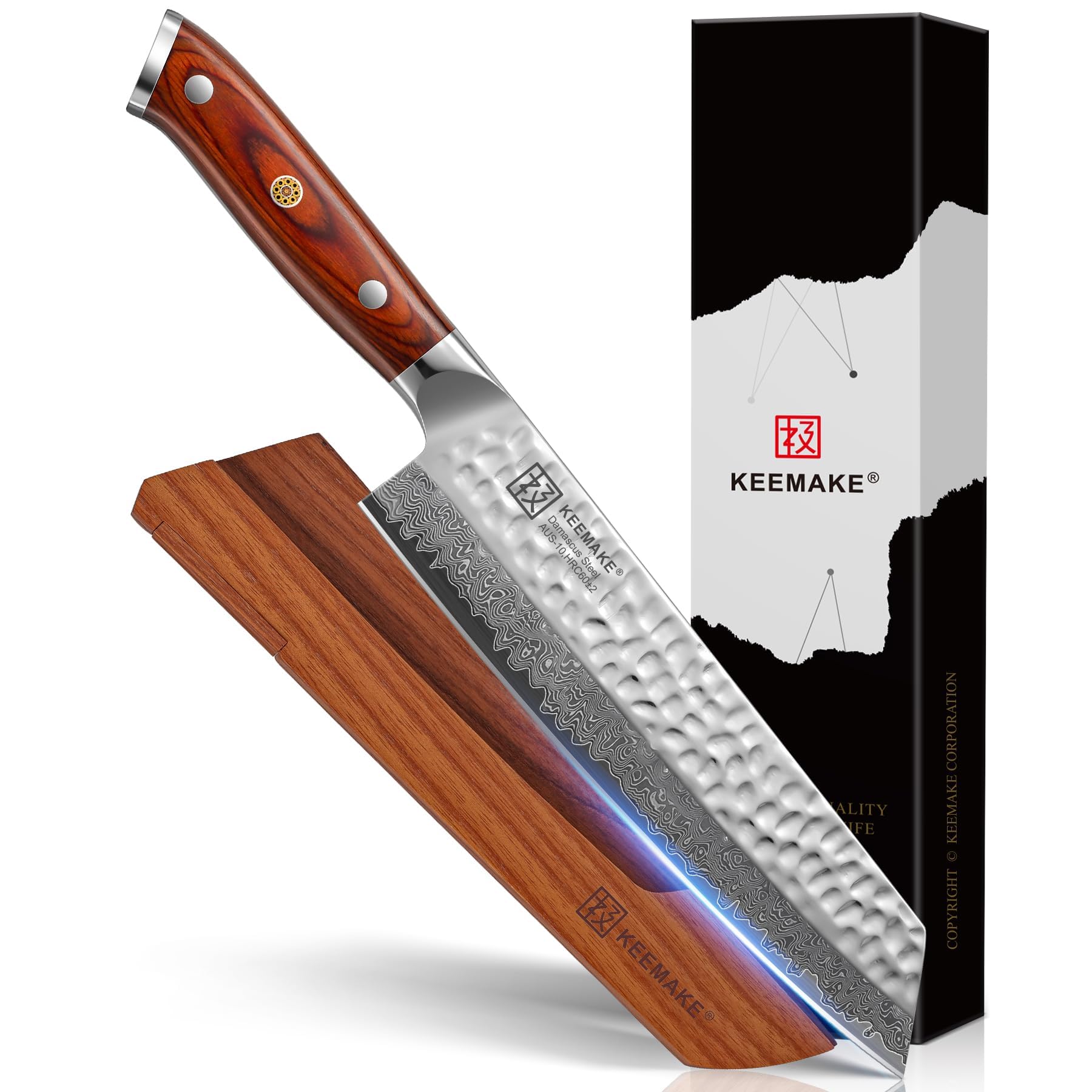
- It has a VG10 core and 67-layer Damascus steel.
- The 8-inch blade has a 10° edge and Kiritsuke style.
- A freestanding ash wood sheath covers the blade and stands upright.
Best For: Home cooks who want a Kiritsuke-style blade and a protective upright sheath.
imarku 8-Inch Hammered Japanese Chef Knife
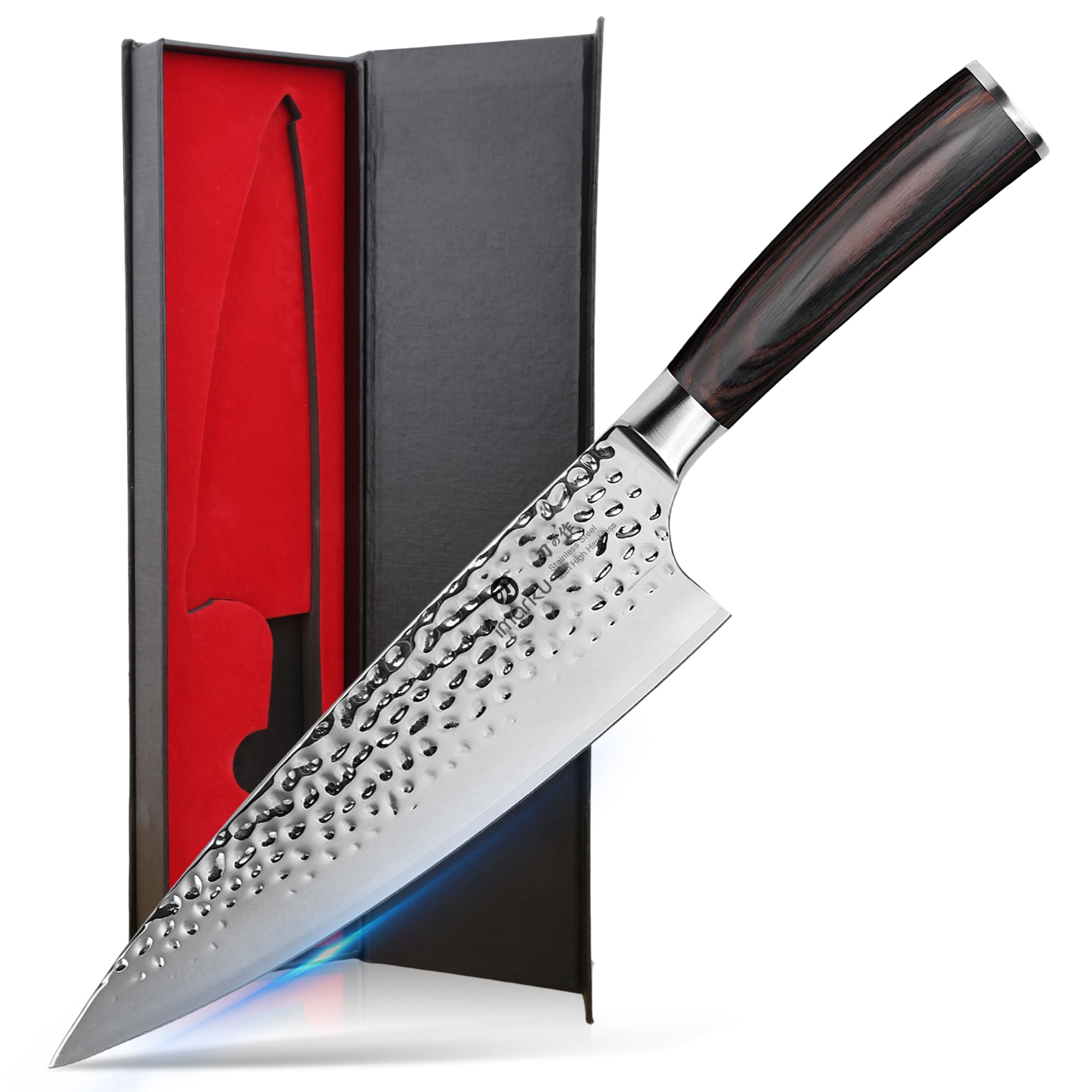
- The blade pairs high-carbon stainless steel with a powder steel edge.
- Its hand-hammered finish is intended to reduce food adhesion.
- The 8-inch blade is 2.3mm thick and sharpened at 13° per side.
Best For: Home cooks who want a forged-style Japanese knife with a hammered blade finish.
Messermeister Meridian Elite 9-Inch
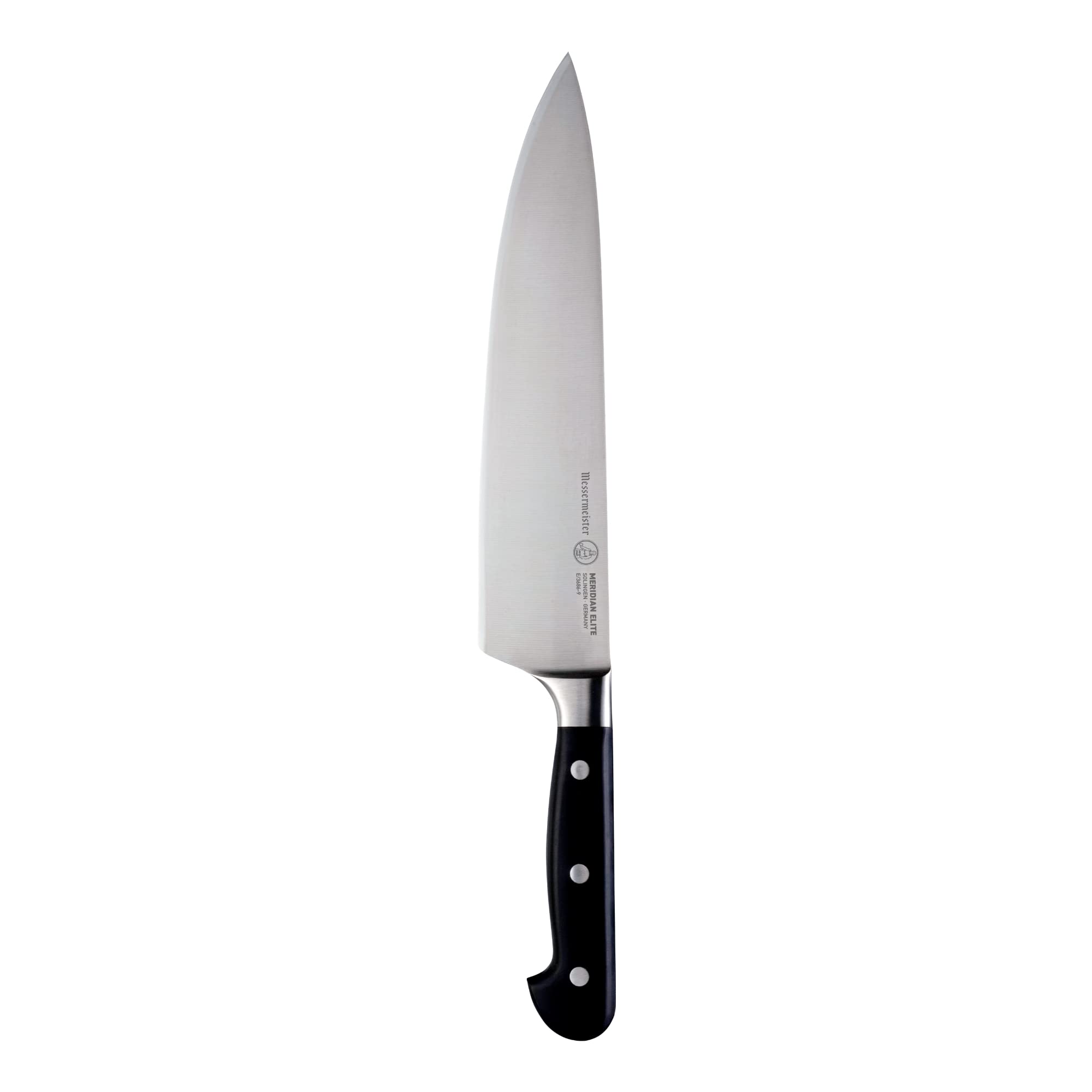
- This version has a 9-inch blade and traditional full-exposed tang.
- The blade is German 1.4116 steel with a 15-degree edge.
- The bolsterless heel exposes the full edge for use.
Best For: Cooks who prefer a longer German chef knife for broad slicing and prep.
Sunnecko 8-Inch VG10 Damascus Chef Knife
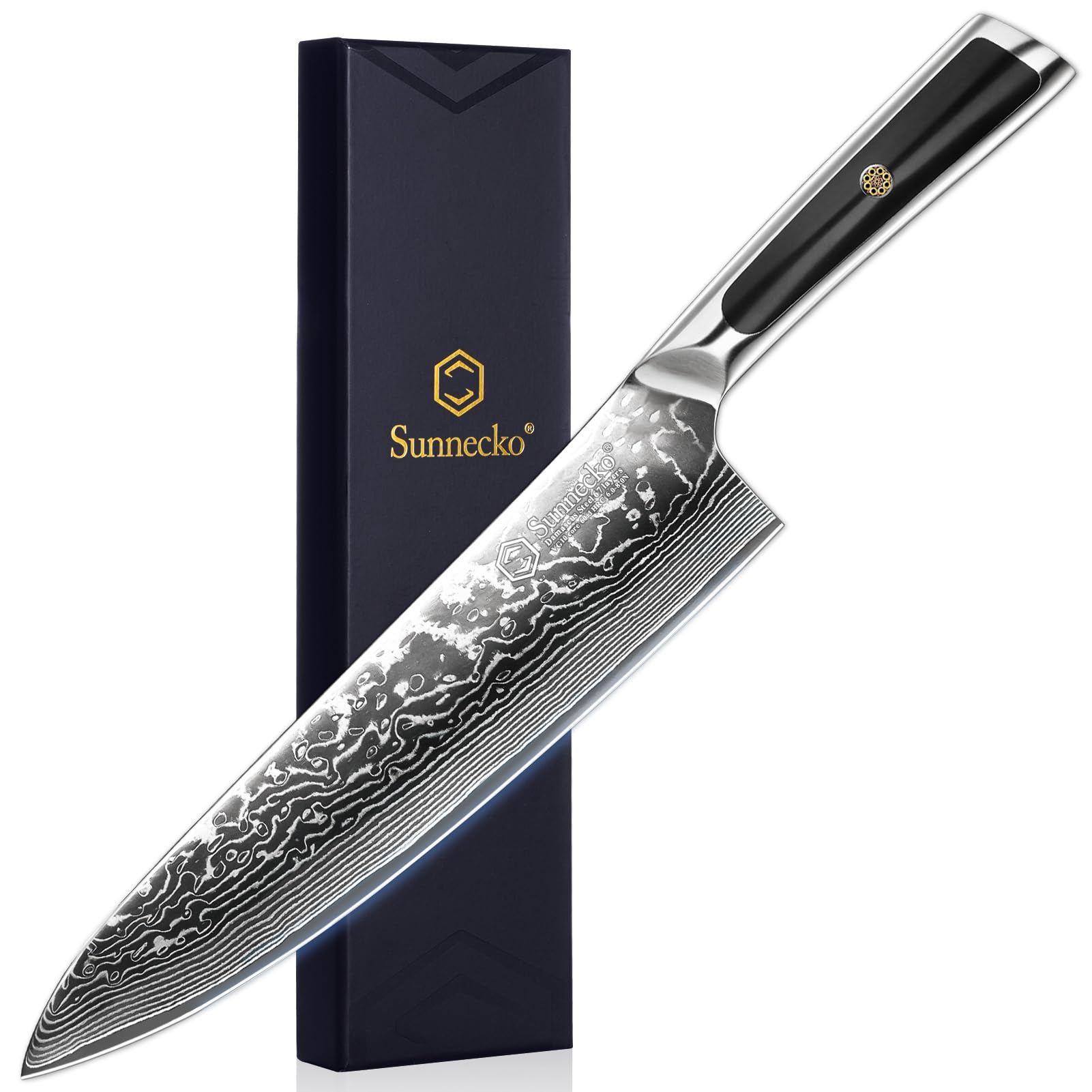
- The blade has a VG10 core and 67 layers of Damascus steel.
- Its edge is honed to 10–12° per side.
- The notes include BBQ and campsite prep among its uses.
Best For: Cooks who want an 8-inch Damascus knife for indoor prep and occasional BBQ or camping use.
imarku 8-Inch Single-Bevel Chef Knife
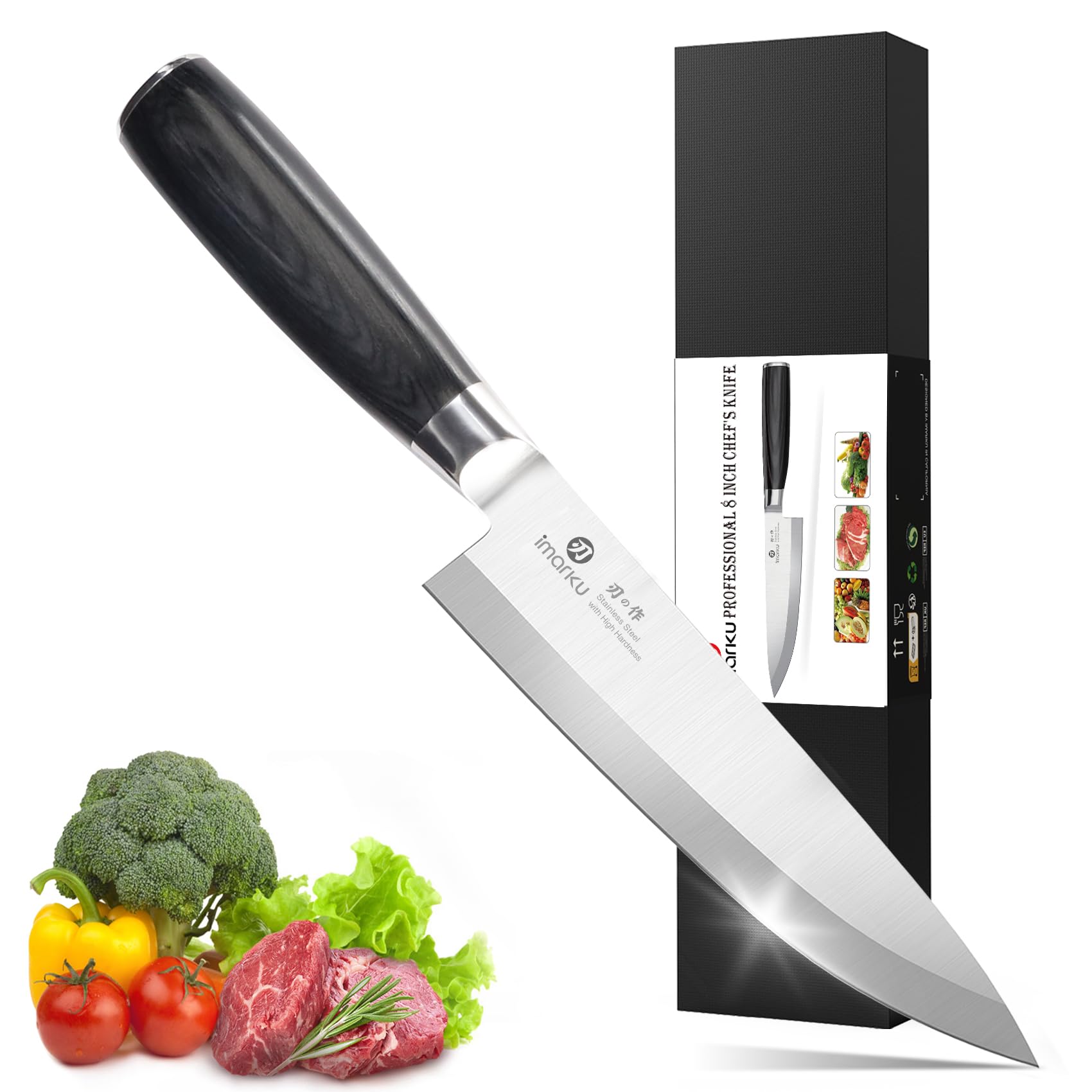
- The blade uses a single bevel sharpened to 13°.
- Its handle is specially designed for people with large hands.
- It is tailored to right-handed users.
Best For: Right-handed cooks who want a single-bevel edge and a grip designed for larger hands.
KEEMAKE 8-Inch Chef Knife
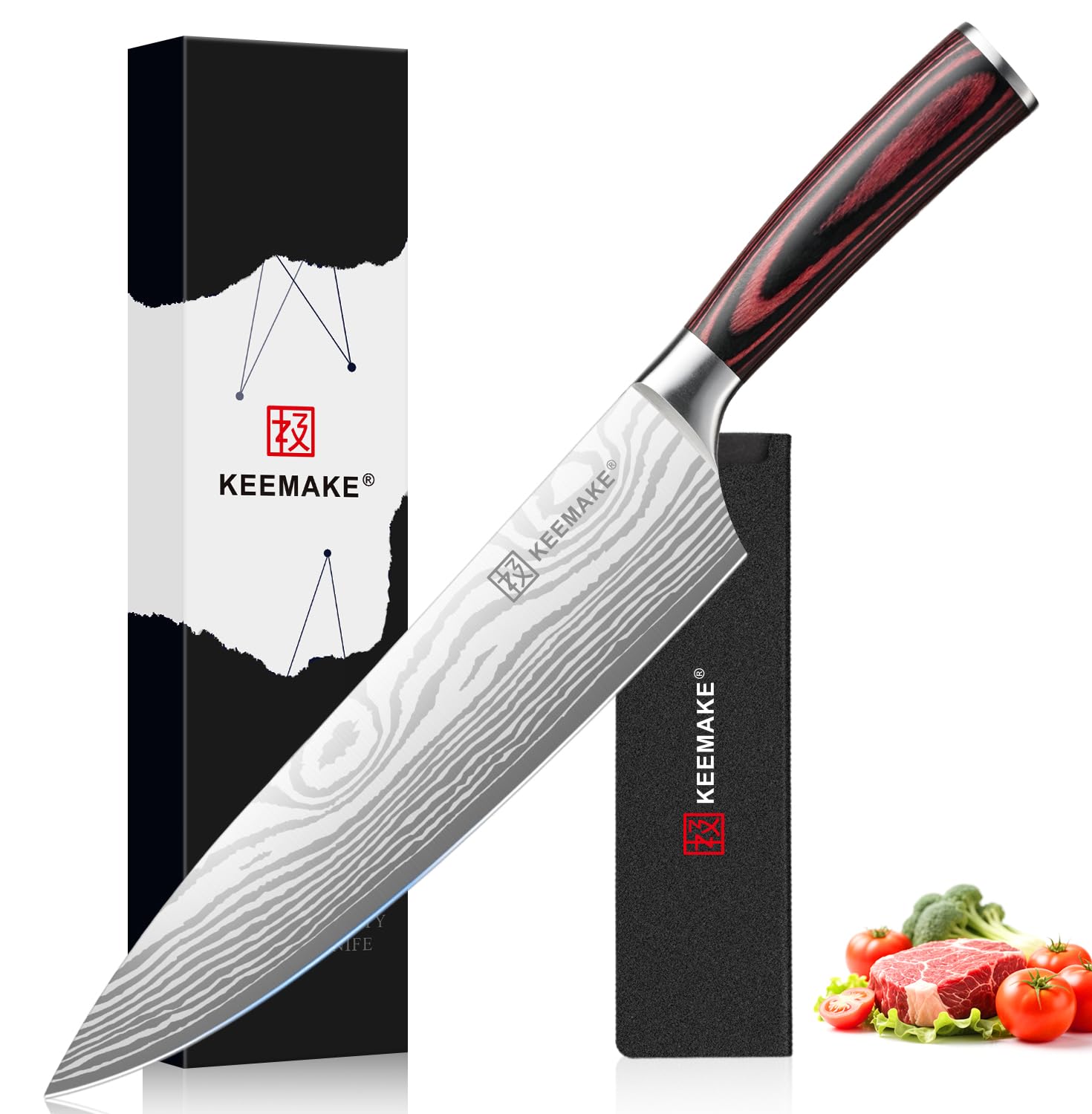
- The forged blade is 1.4116 steel with 58±2 HRC hardness.
- The Pakkawood handle has a curved design and sloped bolster.
- A protective sheath and gift box are included.
Best For: Cooks who want a forged 8-inch knife with an included protective sheath.
Messermeister Meridian Elite 6-Inch
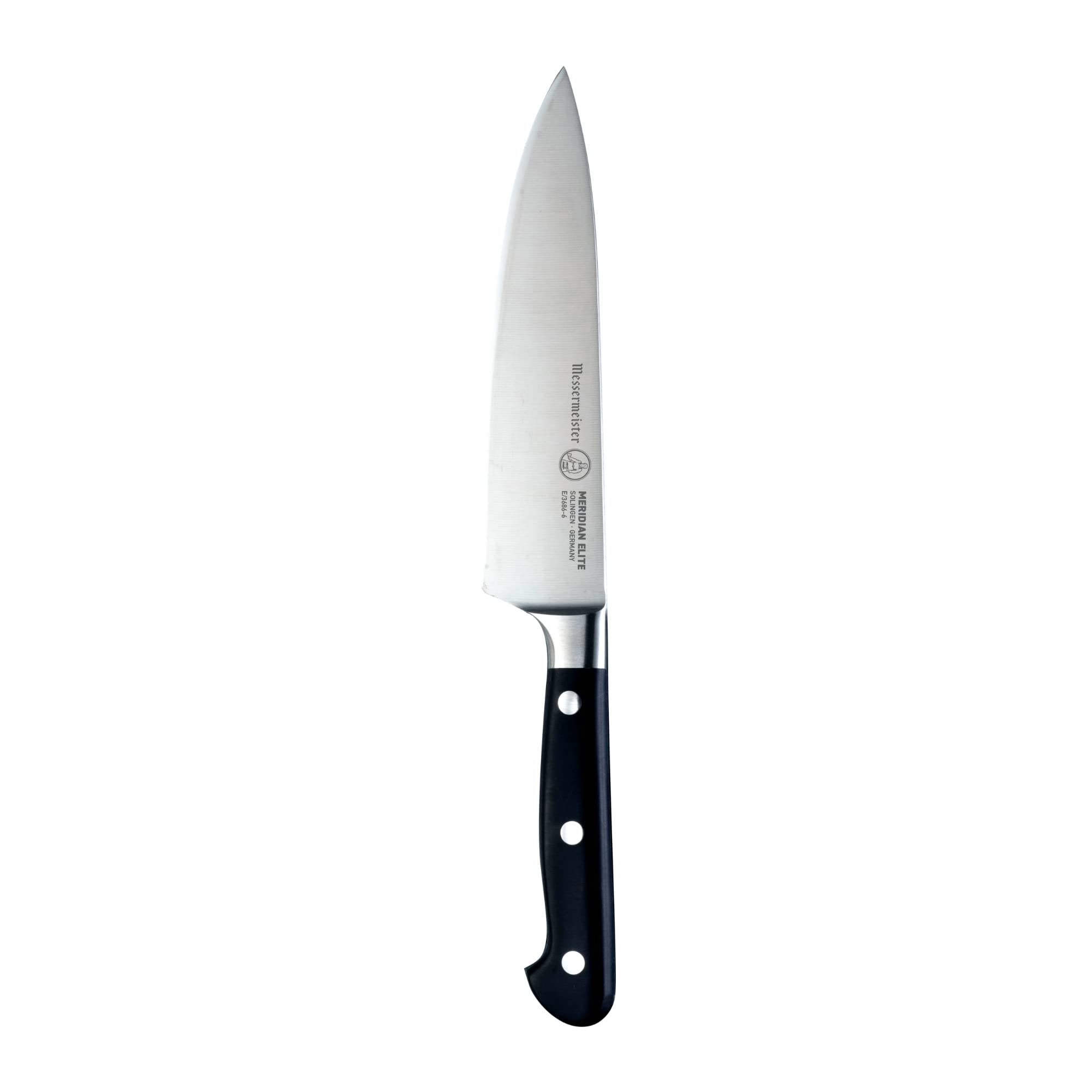
- This version has a 6-inch blade and a full-exposed tang.
- It uses forged German 1.4116 steel with a 15-degree edge.
- The bolsterless heel is designed for full-edge use.
Best For: Cooks who want a shorter traditional chef knife for compact prep and easier storage.
Lightweight Pick for Smaller Hands
imarku Japanese Chef Knife 8 Inch, Sharp Kitchen Knife in Japanese HC Steel
This 8-inch imarku pairs a triple-layer clad blade with a pakkawood handle and a reported weight of 210g. Its 12°±2° double-bevel edge suits slicing, dicing, mincing, and chopping, while the matte sandblasted finish is designed to reduce food sticking.
The lighter build may appeal to cooks who find traditional chef knives heavy, and the notes specifically call out smaller hands. It is not intended for bones, frozen food, or hard squash rinds, so keep a separate tool for those jobs.
Hand washing is recommended.
Best For: Home cooks who want a light, balanced blade for everyday slicing and chopping.
| Pros | Cons |
|---|---|
|
|
Choose this knife if weight and a handle suited to smaller hands matter more than bone-chopping ability. The 8-inch blade and double bevel cover routine vegetable, fish, and boneless-meat prep, while the matte finish addresses food release.
Its stated exclusions are useful to respect: keep it away from bones, frozen foods, and hard squash rinds. Check that the 8-inch length feels manageable on your board, and plan to hand wash it.
Thin, Lighter German-Steel Option
Messermeister Oliva Elite Stealth 8” Chef’s Knife - Fine German Steel Alloy Blade & Natural Mediterranean Olive Wood Handle - Rust Resistant & Easy to Maintain
The Oliva Elite Stealth combines a German 1.4116 steel blade with a natural Mediterranean olive wood handle. Its smooth 15-degree edge is intended for fruit, vegetables, meat, and fish, and the bolsterless heel uses the blade from heel to tip while simplifying honing and sharpening.
Messermeister says this 8-inch version is about 25% thinner and 10% lighter than its traditional chef’s knife. That profile makes it a distinct option for cooks who want a less substantial feel.
The natural wood grip and blade geometry are the central tradeoffs to weigh against a heavier, full-tang design.
Best For: Cooks who prefer a thinner, lighter German-steel knife with an olive wood handle.
| Pros | Cons |
|---|---|
|
|
This option fits someone who wants an 8-inch German-steel knife with a thinner, lighter profile and a natural olive wood handle. The bolsterless heel is a practical detail for cooks who use and maintain the entire edge.
Consider whether the reported thinner feel suits your cutting style; the notes do not provide hardness or care instructions, so confirm upkeep guidance before purchase. Its size and all-purpose ingredient list make it a conventional main prep knife.
Traditional Full-Tang Workhorse
Messermeister Meridian Elite 8” Traditional Chef’s Knife - Fine German Steel Alloy Blade - Rust Resistant & Easy to Maintain
The Meridian Elite is an 8-inch traditional chef’s knife with a hot-drop hammer-forged blade, triple-rivet full-exposed tang, and POM handle. Its German 1.4116 steel alloy has a 15-degree edge and is described as rust resistant and easy to maintain.
The notes also emphasize its heavier weight and balance in the handle, which may suit cooks who like the blade to glide through meat and vegetables. A bolsterless heel keeps the usable edge accessible for sharpening.
The substantial feel is a matter of preference, so consider it against lighter knives if you work through long prep sessions.
Best For: Cooks who like a heavier, traditionally built German chef knife for daily prep.
| Pros | Cons |
|---|---|
|
|
Choose the Meridian Elite if you want a traditional 8-inch German chef knife with a full-exposed tang and a heavier feel. Its 15-degree edge and bolsterless heel support general prep and ongoing sharpening.
The weight is its clearest tradeoff: some cooks prefer the momentum, while others may favor a lighter knife for extended chopping. Check how a heavier handle-balanced knife feels in your grip, since no exact weight is supplied.
Damascus Blade With Countertop Sheath
8 Inch Damascus Chef Knife, Japanese Kitchen Knife with VG10 Steel
This 8-inch Kiritsuke knife combines a VG10 core, 67-layer Damascus construction, and a 10° edge. A pakkawood handle, triple rivets, and full-tang construction add to its balanced design, while the notes describe the blade as suitable for vegetables, fruit, meat, and fish.
Its distinctive storage feature is a freestanding ash wood sheath that can stand upright on a countertop and cover the edge between uses. That can be useful when drawer storage is inconvenient.
It is still a large chef knife, so make sure its shape and storage arrangement suit your kitchen before buying.
Best For: Home cooks who want a Kiritsuke-style blade and a protective upright sheath.
| Pros | Cons |
|---|---|
|
|
This is a good fit if a protective sheath that stands upright on the counter is useful in your kitchen and you want a Kiritsuke-style profile. The 8-inch length and 10° edge make it a full-size prep option, while Damascus construction and VG10 core distinguish its blade.
Check that your storage space accommodates the upright sheath, and confirm care instructions for the materials before buying.
Hammered Edge for Food Release
imarku 8 Inch Chef Knife, Hand-Hammered Japanese Kitchen Knife, High Carbon Steel Chef's Knife with Powder Steel Edge, Ultra Sharp Cooking Knife with Ergonomic Handle for Professional & Home Chefs
The imarku 8-inch knife pairs a high-carbon stainless steel blade with a powder steel edge and hand-hammered finish. Its V-shaped edge is sharpened to 13° per side, and the Pakkawood handle is shaped for an ergonomic grip.
The notes present it as an all-purpose knife for chopping, dicing, and slicing vegetables, fruit, and meat. The hammered surface is intended to reduce food adhesion, which may appeal to cooks who dislike ingredients clinging to a smooth blade.
Its 2.3mm blade thickness is also specified, giving buyers a concrete detail to compare with other options.
Best For: Home cooks who want a forged-style Japanese knife with a hammered blade finish.
| Pros | Cons |
|---|---|
|
|
Choose this knife if the hammered finish and powder steel edge are more compelling than a plain blade or a specialized silhouette. The 8-inch size and stated uses cover standard home prep, while the handle is intended to balance comfort and control.
Its 2.3mm thickness is useful when comparing blade feel, but no weight or care method is supplied. Confirm storage and cleaning details before settling on it.
Longer German Knife With Full Tang
Messermeister Meridian Elite 9” Traditional Chef’s Knife - Fine German Steel Alloy Blade - Rust Resistant & Easy to Maintain
The 9-inch Meridian Elite carries the same traditional series details: a hot-drop hammer-forged blade, triple-rivet full-exposed tang, and POM handle. Its German 1.4116 steel alloy has a 15-degree edge and is described as rust resistant and easy to maintain.
The bolsterless heel makes the full edge available for cutting and sharpening. Compared with a shorter chef knife, the 9-inch format gives more blade length for broad slicing, but also calls for more board space and control.
Choose it if that longer reach suits your prep habits and storage area.
Best For: Cooks who prefer a longer German chef knife for broad slicing and prep.
| Pros | Cons |
|---|---|
|
|
Pick this version if you specifically want the longer 9-inch blade in Messermeister’s traditional Meridian Elite construction. It retains the series’ 15-degree edge, full tang, and bolsterless heel for general prep and sharpening.
The longer blade can be useful for broad cuts, but it needs room to move and may feel less nimble on a small board. Check the knife’s balance and storage fit before choosing it over a shorter model.
Damascus Steel for Outdoor Prep
Sunnecko 8 Inch Japanese Damascus Chef Knife - Ultra Sharp VG10 Steel | 10-12 Degree Edge 67 Layers Kitchen Cooking Knives for Meat, Vegetable & Fruit, Full Tang, Camping & BBQ Gifts for Men
Sunnecko’s 8-inch chef knife combines a VG10 vacuum-treated core with 67 layers of high-carbon stainless Damascus steel. It has a 10–12° per-side edge, full-tang construction, and an ABS handle.
The notes position it for slicing, dicing, and chopping across vegetables, fruit, seafood, and meat, with outdoor BBQ and camping use also mentioned. That wider setting is a useful distinction if you want one knife for kitchen and campsite prep.
The handle material and storage needs deserve attention before taking it outdoors, since the supplied details do not identify a sheath.
Best For: Cooks who want an 8-inch Damascus knife for indoor prep and occasional BBQ or camping use.
| Pros | Cons |
|---|---|
|
|
Consider this option if you want Damascus construction and expect to use the knife both at home and for outdoor cooking. The 8-inch format, full tang, and ABS handle suit its broad food-prep role, while the stated 10–12° edge is a notably acute geometry.
Outdoor use makes protection and transport important; the notes do not establish that a sheath is included. Confirm how you will store and carry it before making it your campsite knife.
Single-Bevel Knife for Right-Handed Cooks
imarku Chef Knife 8-Inch Pro Japanese Kitchen Knife High-Carbon Stainless Steel Paring Knife Ergonomic Handle Rasor Sharp Single-Bevel Edge Gift for Men
This imarku has an 8-inch high-carbon stainless steel blade with a single bevel sharpened to a 13° angle. Its Pakkawood handle is described as non-slip and specially shaped for people with large hands, and the knife is explicitly tailored to right-handed users.
The combination makes it a more specialized choice than a standard double-bevel chef knife. It is intended for general slicing, chopping, and dicing, with small to medium fish also called out.
The notes advise avoiding dishwashers and soaking, so hand care is part of the ownership routine.
Best For: Right-handed cooks who want a single-bevel edge and a grip designed for larger hands.
| Pros | Cons |
|---|---|
|
|
This knife is best considered by right-handed cooks who want a single-bevel edge and a handle designed for larger hands. Those details matter more here than general versatility: the edge style and user orientation are specific, so check that they suit your technique before buying.
It can handle everyday prep and small to medium fish, but its care guidance rules out dishwasher use and soaking.
Includes Sheath for Kitchen or Travel
KEEMAKE 8" Chef Knife, Ultra Sharp Kitchen Knife with Ergonomic Handle
KEEMAKE’s 8-inch chef knife uses forged 1.4116 high-carbon stainless steel rated at 58±2 HRC, with a Pakkawood handle and a sloped bolster for a pinch grip. Its hand-sharpened edge is given as 8°–12° per side, and the listed tasks range from slicing and mincing to light boning.
A gift box and protective sheath are included, which make storage and transport easier to plan. The notes describe it for broad kitchen use, including meat and vegetables.
It is not necessary to interpret its sharpness language as a guarantee of performance; compare the stated steel, edge, grip, and included protection with your needs.
Best For: Cooks who want a forged 8-inch knife with an included protective sheath.
| Pros | Cons |
|---|---|
|
|
This is a sensible pick if you want an 8-inch forged knife with a sheath already included. Its specified steel hardness and edge angle give concrete points for comparison, while the curved handle and sloped bolster target pinch-grip control.
The notes allow light boning but do not establish suitability for heavy-duty bone work. Check the weight and care guidance if those factors matter to your routine.
Compact Traditional German Chef Knife
Messermeister Meridian Elite 6” Traditional Chef’s Knife - Fine German Steel Alloy Blade - Rust Resistant & Easy to Maintain
The 6-inch Meridian Elite brings the traditional series construction into a more compact format. It has a hot-drop hammer-forged blade, triple-rivet full-exposed tang, POM handle, and German 1.4116 steel with a 15-degree edge.
The notes describe it for cutting, chopping, slicing, and dicing a range of foods, while the bolsterless heel supports use of the full edge. Its shorter blade may be easier to control on a small board or store in a crowded drawer, though it offers less reach for broad slicing than the longer versions.
Confirm that a compact chef knife covers your regular prep volume.
Best For: Cooks who want a shorter traditional chef knife for compact prep and easier storage.
| Pros | Cons |
|---|---|
|
|
Choose the 6-inch Meridian Elite if board space, compact storage, or a shorter cutting stroke is a priority. It keeps the traditional series’ forged construction, 15-degree edge, and bolsterless heel.
The tradeoff is reach: cooks handling large produce or broad roasts may prefer a longer blade. Because the notes do not give the weight for this size, check its balance and heft before choosing it.
How to Choose Chef Knives
How We Picked Chef Knives
We prioritized complete knives that can serve recognizable kitchen prep roles, then looked for meaningful distinctions in blade style, length, handle, construction, and included storage. The selection includes conventional German-style knives, Japanese-influenced edges, a single-bevel model, Kiritsuke profiles, and a cleaver-style alternative was left out because it is less representative of a general chef knife.
We also avoided counting color variants or multiple sizes of the same maker’s model as separate picks. A useful chef knife roundup should help readers choose a shape and feel, not inflate the list with near-identical offers.
Comparing Chef Knives
The main differences are blade length, edge geometry, and handling. The 8-inch knives suit broad everyday prep, while the 6-inch Meridian Elite favors tighter board space and the 9-inch version offers more reach.
A single bevel is a more specific choice for right-handed users; double-bevel edges are the more straightforward fit for cooks who want a familiar all-purpose profile.
Steel and construction details also vary. The Meridian Elite uses German 1.4116 steel and a traditional full-exposed tang, while the Damascus picks use layered construction and the imarku models call out powder or clad steel designs.
These details help narrow the field, but grip, balance, and edge maintenance should guide the final choice.
| Product | Standout features | Best for |
|---|---|---|
| imarku Japanese Chef Knife 8 InchCheck Price |
| Home cooks who want a light, balanced blade for everyday slicing and chopping. |
| Messermeister Oliva Elite Stealth 8-InchCheck Price |
| Cooks who prefer a thinner, lighter German-steel knife with an olive wood handle. |
| Messermeister Meridian Elite 8-InchCheck Price |
| Cooks who like a heavier, traditionally built German chef knife for daily prep. |
| 8-Inch VG10 Damascus Chef KnifeCheck Price |
| Home cooks who want a Kiritsuke-style blade and a protective upright sheath. |
| imarku 8-Inch Hammered Japanese Chef KnifeCheck Price |
| Home cooks who want a forged-style Japanese knife with a hammered blade finish. |
| Messermeister Meridian Elite 9-InchCheck Price |
| Cooks who prefer a longer German chef knife for broad slicing and prep. |
| Sunnecko 8-Inch VG10 Damascus Chef KnifeCheck Price |
| Cooks who want an 8-inch Damascus knife for indoor prep and occasional BBQ or camping use. |
| imarku 8-Inch Single-Bevel Chef KnifeCheck Price |
| Right-handed cooks who want a single-bevel edge and a grip designed for larger hands. |
| KEEMAKE 8-Inch Chef KnifeCheck Price |
| Cooks who want a forged 8-inch knife with an included protective sheath. |
| Messermeister Meridian Elite 6-InchCheck Price |
| Cooks who want a shorter traditional chef knife for compact prep and easier storage. |
Choosing a Chef Knife Length and Edge
An 8-inch blade is a common middle ground for slicing vegetables, fruit, and boneless meat, but it still takes board space and needs room to move. A shorter blade can feel easier to manage for small prep jobs, while longer blades suit cooks who regularly slice larger ingredients.
Try to match blade length to the board and foods you handle most often.
Edge style affects who can use a knife comfortably. The single-bevel imarku is explicitly tailored to right-handed users, while the other picks include double-bevel or general-purpose edge descriptions.
If you are switching from a familiar knife, consider whether a specialized profile is worth adapting your technique.
Handles, Storage, and Chef Knife Care
Handle materials range from Pakkawood and olive wood to POM and ABS. Some notes call out ergonomic shaping, balance, or a grip designed for larger hands; if possible, choose by how the handle fits your grip rather than appearance alone.
Heavier knives can feel efficient for some cooks, while lighter options may be easier to maneuver over longer prep sessions.
Storage accessories vary as much as the handles. The 8-inch VG10 Kiritsuke includes an ash wood sheath designed to stand upright, and the KEEMAKE includes a protective sheath.
Another pick has a PVC sheath, while some do not specify a guard. Follow each knife’s care instructions; the imarku single-bevel model advises against dishwashing and soaking, and another imarku recommends hand washing.
Who Should Buy Which Chef Knife?
For a light 8-inch daily knife, consider the imarku with the 210g handle and triple-layer clad blade. For traditional German construction, choose between the Meridian Elite’s heavier 8-inch format and its compact 6-inch or longer 9-inch sizes; the Oliva Elite Stealth offers a thinner, lighter feel with an olive wood handle.
If storage protection matters, compare the KEEMAKE sheath with the upright ash wood sheath on the Damascus Kiritsuke. Right-handed cooks seeking a single bevel can consider the imarku specialized model.
For a hammered blade surface, the imarku powder-edge knife is the distinctive option.